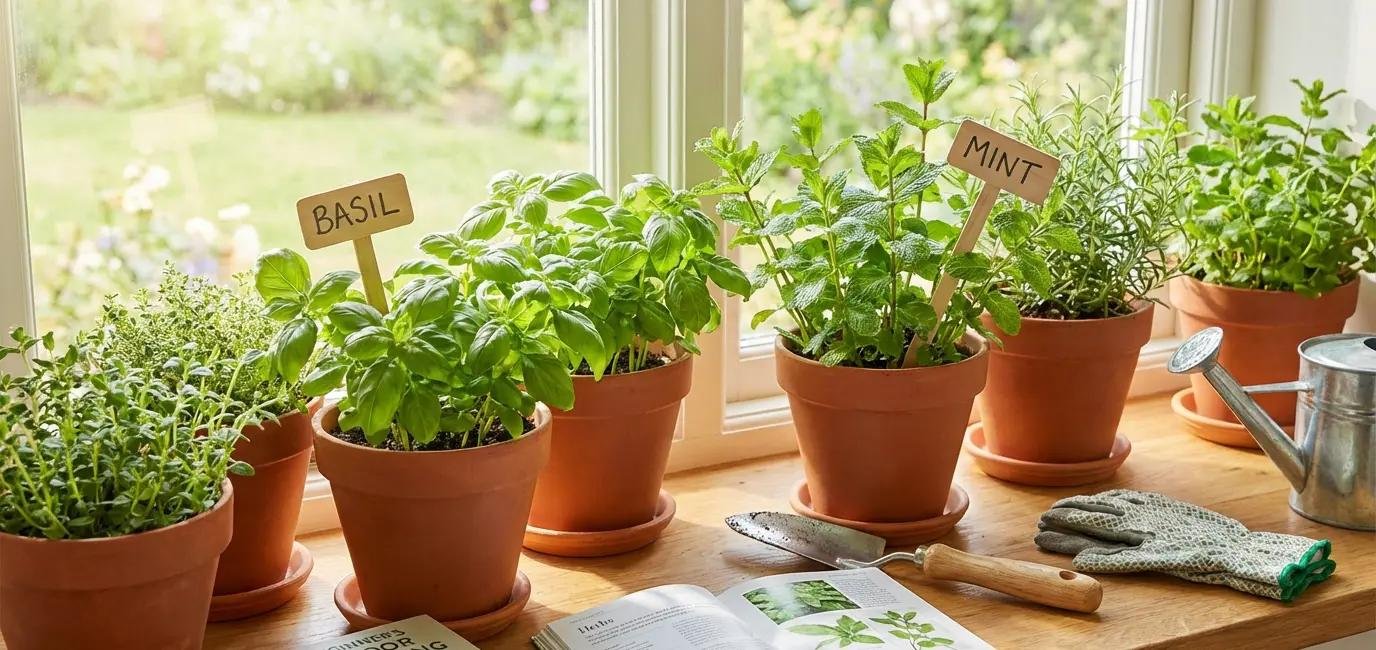
Bring more freshness to your kitchen with simple gardening ideas, practical herb-growing tips, and beginner-friendly plant care advice. Whether you have a sunny windowsill, a small balcony, or a backyard garden, discover how to grow fresh herbs and use them in everyday cooking.
Best Herbs to Grow at Home
Growing herbs at home is a simple way to bring fresh flavors into your everyday cooking. Basil, mint, parsley, thyme, and rosemary are popular choices, but the best herb for your space depends on sunlight, temperature, and growing conditions. Start with one or two plants, learn what each one needs, and expand your herb garden as you gain experience.
Basil: A Kitchen Favorite
Basil is a popular herb used in pasta, salads, sauces, and homemade pesto. It generally grows best in a warm, bright location with suitable drainage. Check the soil regularly and water when needed, rather than allowing the potting mix to remain waterlogged. Harvest a few healthy leaves at a time so the plant can continue growing.
Mint: Fresh and Fragrant
Mint adds a refreshing flavor to tea, cold drinks, salads, and desserts. It can grow vigorously, so a separate container is often a practical choice. Place the pot where the plant receives suitable light, keep the soil appropriately moist, and trim the stems regularly to encourage fresh growth.
Parsley: An Everyday Essential
Parsley is a versatile herb used in soups, salads, sauces, and garnishes. Choose a container with drainage holes and a suitable potting mix. Provide the light conditions recommended for your variety, water according to the soil’s moisture, and harvest the outer stems carefully as the plant grows.
Thyme: A Fragrant Mediterranean Herb
Thyme brings a distinctive aroma to roasted vegetables, soups, and savory dishes. It generally prefers a sunny position and well-drained soil. Avoid keeping the roots constantly wet, and allow the growing medium to dry appropriately between waterings. Good drainage is especially important when growing thyme in pots.
Rosemary: Perfect for Savory Dishes
Rosemary is an aromatic herb often paired with roasted potatoes, vegetables, and other savory meals. It usually grows best in a bright, sunny location with excellent drainage. Choose a container that allows excess water to escape, and avoid watering again until the soil conditions indicate that the plant needs it.
How to Grow Herbs in Containers
You do not need a large garden to grow useful kitchen herbs. Containers can work well on a balcony, patio, or bright windowsill, provided the plants receive suitable light and care. Follow these basic steps to get started.
Watering and Everyday Herb Care
Different herbs have different watering needs. Mint generally prefers more consistent moisture, while rosemary and thyme usually need well-drained soil and should not remain waterlogged. Check your plants regularly for yellowing leaves, wilting, pests, or changes in growth. Adjust watering and light according to the plant’s condition, the season, and your local climate.
Common Herb-Growing Mistakes
Overwatering: Constantly wet soil can damage roots, particularly in herbs that need good drainage.Not enough light: Some herbs become weak or grow poorly when their light requirements are not met.Pots without drainage: Excess water needs a way to escape from the container.Crowding plants: Herbs need adequate room for growth and airflow.Harvesting too much: Removing too many leaves or stems at once can slow a plant’s recovery.Observing your herbs regularly helps you identify problems early and adjust their care.
Bring Fresh Herbs into Your Kitchen
Homegrown herbs can make everyday cooking more enjoyable. Add basil to tomato dishes and pasta, parsley to salads and soups, mint to tea, thyme to roasted vegetables, or rosemary to potatoes. Harvest only what you need and rinse fresh herbs before using them in your meals. Explore our recipes for more ideas on cooking with fresh ingredients.
Start Your Garden One Step at a Time
Start with one or two herbs that suit your available space and growing conditions. Learn how much light and water each plant needs, observe how it responds, and build your routine gradually. Gardening takes patience, and results vary with climate, season, and plant variety. With regular observation and suitable care, a small herb garden can become a useful part of your kitchen.
Explore More from One World, One Stove
Discover everyday recipes, practical cooking tips, and fresh ideas to bring more flavor into your kitchen. From growing herbs at home to using fresh ingredients in simple meals, One World, One Stove brings cooking and gardening inspiration together.